Monthly Archives: February 2026

Driving Revenue Growth Through Multichannel Selling: Insights into 3P Commerce

VN:F [1.9.22_1171]
Rating: 5.0/5 (1 vote cast)

Multichannel Selling | e-commerce market
The e-commerce market is globally growing at a CAGR of 8.02% between 2025 and 2029. The number of shoppers is forecasted to grow to 3.6 billion by 2029. There is no doubt that the e-commerce sector is growing rapidly. In such scenarios, traditional ways do not work anymore. Online customers today expect convenience, choices, and the best prices. This kind of dynamically evolving e-commerce landscape makes it essential for retailers and brands to adapt by embracing multichannel selling.

Third-party (3P) commerce is emerging as one of the primary growth drivers so that online businesses can maximize revenue through diversified sales channels. Keep reading to learn more about 3P commerce challenges, benefits, etc.

Understanding 3P Commerce

With 3P commerce, brands and retailers can reach a bigger consumer market using online marketplaces and other third-party platforms. Retailers can access unowned stocks, thereby reducing risks linked with stock management. Brands can improve their market reach as they don’t just sell at their online stores but also through multiple channels. Thus, businesses can leverage this model to make the most of consumer demands and optimize resources.

What Data Tells Us

1. Juggling Multiple Marketplaces Isn’t Easy

3P commerce has a major disadvantage, though. For brands and retailers, managing numerous 3P platforms often poses operational challenges. The study showed that businesses usually navigate four separate platforms. This ultimately hits their operations and costs. One of the major concerns is the need for specialized professionals, as reported by almost 65% of global executives. 45% said that operating costs increase. Both these factors cut into the profit margins significantly, as per the study. Speed to market is also a big concern as the onboarding process generally takes up to six weeks.

Of all the surveyed executives, 97% believed that a centralized commerce platform or solution would be better to streamline operations, reduce costs, and increase profitability.

2. More Channels, More Revenue

3P commerce continuously seems to be gaining traction as an integral part of multichannel selling strategies. Almost 70% of the surveyed executives shared that about 50% of their total revenues are generated from 3P commerce. 29% say that more than 50% of their revenues come from third–party commerce. In the past year, 3P commerce revenues have increased, as confirmed by 68% of brands and retailers worldwide.

These figures show that third-party commerce is indeed a strong strategy for e-commerce businesses to gain financial success.

3. 3P is Becoming a Growth Engine for Modern Brands

The study shows that almost 95% of executives globally suggest that sales generated from 3P commerce channels contribute to the success of the company. Almost all retailers and brands covered in the study recognize the importance of 3P as a growth driver.

The primary motivators for the use of the 3P commerce model are:

– businesses want to reach out to a larger number of customers

– businesses want to target customers on their preferred channels of shopping

– to increase their cross-border sales and revenues

– to avail more retail media ad opportunities

– to improve their total sales volume

– to lower margins

– to increase product assortment without risks of owned inventory

3P Commerce: Emerging Trends

  • Increased use of technology: Almost 49% of businesses use between 4 to 6 platforms to manage their 3P commerce operations. Such businesses need to use technology to manage these platforms successfully.
  • Increase adoption of AI: The use of Artificial Intelligence (AI) in e-commerce is automating all manual-led tasks. This is revolutionizing the industry. Almost 98% of surveyed executives feel that AI is crucial for successfully managing their e-commerce operations.
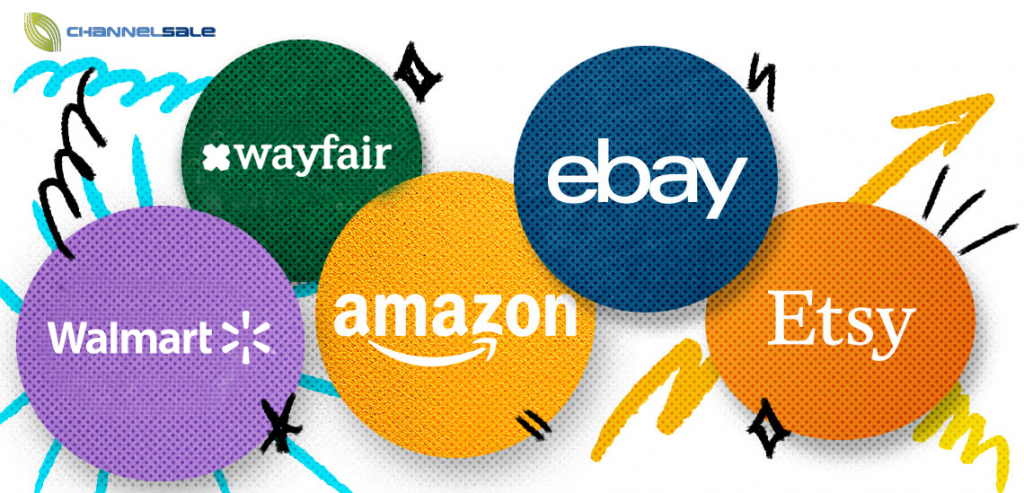
  • Cross-border selling: 3P commerce has also opened the chance for online businesses to sell cross-border. They can use the potential of global e-commerce platforms like eBay, Amazon, Walmart etc., without investing in developing their own infrastructure. Almost 96% of those surveyed felt that without third-party opportunities, they could not sell in international markets. After all, cross-border sales have multiple challenges like currency conversions, logistics, international regulations, translations, etc.
  • Use of social commerce: The use of social media platforms is also on the rise in 3P commerce. Around 82% of executives integrate social commerce into their strategy. Social commerce allows brands to reach consumers directly through platforms like TikTok, Instagram, and Facebook. The use of shoppable ads and influencer posts facilitates seamless purchases.
  • Retail media advertising: This is another tactic that is catching up. It is a powerful tool where retail media ads are placed on the e-commerce app or site of the retailer to make a last-minute appeal to customers just at the point of purchase.
  • Best solution for meeting supply chain challenges: With 3P commerce, the typical supply chain issues are easier to overcome. Retailers and brands are gradually shifting to 3P commerce. This gives them greater flexibility beyond owned channels. Nearly all surveyed executives (almost 96% of executives) agreed that supply chain agility is crucial for growth.

Why Everyone’s Betting Big on 3P Commerce?

There are different reasons for this.

  • Study results affirms that it has been convenient to tap into international markets without the logistical burden of maintaining foreign warehouses.
  • Increased visibility and customer acquisition confirming that selling through multiple platforms has helped achieve this.
  • They are using 3P commerce because in a competitive market, they need new revenue streams to stay profitable.
  • Choose to work with third-party commerce because diversified channels help businesses drive higher sales across multiple platforms.
  • 3P helps them expand their offerings through dropshipping and marketplace selling without the burden of excessive inventory.
  • Using 3P and retail media advertising along with platform-based promotions to capture demand effectively.

The Role of Technology in Managing 3P Commerce

One of the biggest challenges in 3P commerce is technology management. Overseeing multiple platforms is proving to be costly and complex for brands and retailers. It was found that most businesses are comfortable using up to four e-commerce platforms.

The biggest issues for businesses in managing multiple platforms include:

  • Tracking ROIs across different sales channels is difficult. Monitoring customer engagement requires real-time insights and analytics.
  • Product listings could vary between different platforms, maintaining product information consistency was a problem.
  • Synchronizing inventory across different channels is an issue.

Integrated Commerce Solutions are poised to be game-changers

Using multiple e-commerce platforms in a 3P commerce strategy is one of the biggest challenges. In the survey, most respondents agreed that this can be very time-consuming and requires expertise for the management of ground operations. It is not an ideal situation. The solution is a unified commerce platform.

This is where platforms like ChannelSale can come to your aid.

Third-party commerce is getting popular and catching up. Brands and retailers cannot brush aside its impact and need to stay focused on their strategies if they want to make it big at online marketplaces. To overcome the challenges, you can consider using platforms like ChannelSale that centralize inventory management, product listings, and order fulfillment, offering real-time views for better decision-making, helping your business manage multiple platforms for third-party businesses seamlessly.

VN:F [1.9.22_1171]
Rating: +1 (from 1 vote)

How Data-Driven Retail Media Helps Sellers Boost Performance

VN:F [1.9.22_1171]
Rating: 5.0/5 (1 vote cast)

Retail Media Strategies for Sellers
E-commerce is evolving at a neck-breaking speed, making all things competitive. Customers today have multiple options to buy a single item from multiple touchpoints. Study reports indicate customers go to a minimum of two websites before they decide to make a purchase. Such random consumer behavior makes it even more necessary for retailers to do everything to catch the attention of their potential customers and retain the information.

This is where retail media comes into play. It is rapidly being sought out by brands. The best thing is that the channel uses a data-driven approach to boost conversions. As per studies, advertising expenses on retail media are expected to go beyond  USD 107 billion. And the impact has been considerable in the last five years, earning almost $30 billion. On the other end, data suggests that almost 44% of consumers look at ads for best-selling items before 37% buy the item.

For Amazon retailers, the good news is that retail media ads can be blended flawlessly in the shopping experience of customers. After all, around 50% of customers in the US purchase products after seeing ads on Amazon. As per data, Amazon has about 7.5% of the advertising market online. The biggest e-commerce platform offers varied ad formats to help brands strengthen their voice. Today, all major online marketplaces like CVS, Walmart, eBay, Kroger, Marriott, etc. have started their retail media networks or RMNs. All these marketplaces are also doing incredible retail media ads. Walmart’s revenue from online ads is growing at a double rate like Amazon, and eBay registered 35% year-on-year growth in Q2.

Consequently, brands need to strategize optimally to use RMNs so that they can stand out in a very crowded e-commerce landscape and gain traction.

Working with Retail Media Algorithms for Optimized Visibility

All RMNs have algorithms built in-house. The core concepts are the same in general. However, the approach to building the algorithms is the same. This cycle includes –

  • Ads and promotions – publishing paid advertisements to increase the effectiveness of retail media and multiplying the other factors mentioned here.
  • Owned content – This includes flawlessly-created content with product titles and descriptions, bullets for improved readability.
  • Earned content – Aspects that denote customer engagement, like reviews and ratings, should be included in the content.
  • Sales velocity – The path to flow, where with increased orders, organic rankings improve with improved visibility. The higher the organic position, the more visible your product will be.

Brands need to focus and maximize all these four elements to boost conversion rates, drive increased product exposure, and make sustainable growth a reality.

The Pyramid Approach to Building a Strong Retail Media Strategy

There are four main sections of the Retail Media Strategy Pyramid.

● Safeguarding Your Brand

After the first step is established, you need to strategize for brand protection. In this step, brands need to bid on branded keywords. This involves securing product detail page placements so that immediate competitors do not gain from keyword-related traffic. Brand protection campaigns result in better ROAS (Return on Ad Spend) as conversions are more likely when customers land on the site after searching for a brand. Brands have better control over their narrative, and the risk of losing customers to competitors is reduced.

● Reaching New Shoppers

Building new customers is as important as retaining old ones. To do this, brands also need to target non-branded category keywords, audience targeting based on categories, and use ad formats like Sponsored Brand Video to drive higher engagement.

The ROAS is usually lower in the case of customer acquisition campaigns than brand protection campaigns. This is because a new audience needs more time to convert as they use more time to engage with the brand. When used with brand protection, a sustainable pipeline is created for long-term growth.

● Smart Product Grouping & Keyword Strategy

This is the basis of a successful campaign. Consumer search behavior is studied and analyzed for brands to identify keywords with the highest potential for optimized performance. Big online marketplaces like eBay and Amazon offer this component for automated campaigns. Brands can use this feature to shortlist keywords that have the most potential to drive conversions, set initial ROAS benchmarks, and allocate budgets for paid media campaigns.

● Winning Over Competitor Customers

This strategy is about targeting potential customers of competitive brands. The ROAS on this strategy can be lower because multiple touchpoints are involved. However, competitor conquesting strategy is good for improving brand awareness and also targeting a higher market share. How can this be done? Start by targeting the keywords used by competitors. Ads are placed on competing product detail pages. Brands can feature promotional incentives for customers to switch from one brand to another.

Retail Media Strategies

How to Make Retail Media Campaigns Efficient?

Efficient retail media advertising campaigns are crucial for optimal growth. Here are a few strategies to get there –

  • Curate Target ROAS for Each Strategy: Don’t stick to a single ROAS. Break it down. For example, an ROAS baseline for auto campaigns is suggested. For brand protection, higher ROAS should be targeted, a lower ROAS for new customer acquisition, while a higher CPCs for competitor conquesting.
  • Budgeting As Per Strategy Goals: Remember budgets should be allocated depending on whether a brand prioritizes efficiency or growth. For efficiency, invest more in brand protection and organic ranking improvements. For growth, you need to allocate more budget to customer acquisition and conquesting.
  • Keep Optimizing: For effectiveness, optimization needs to be ongoing. Examples include increasing Budgets for high-performing campaigns and using negative keywords to filter out low-performing traffic.

Retail media ads offer brands robust ways to engage consumers at the point of purchase. Brands must adopt a data-driven approach, leveraging catalog segmentation, brand protection, customer acquisition, and competitor conquesting.

Retail Media Best Practices

1. Use Automation to Save Time & Improve Ad Performance

Manual management can be unsustainable, especially when your catalog grows. Use automation tools help streamline operations. To stop underperforming ads, create filters. Create activate ads for new or seasonal products.  Also, adjust bids based on inventory and sales velocity.

2. Put Budget Behind Your Bestsellers

The ad efficiency can be driven by using precision targeting. Sponsored Products on Amazon can strategically boost visibility, and convert high-intent traffic.

  • Target your own Amazon Standard Identification Numbers (ASINs) so that your listings is protected from competitor ads.
  • Use Sponsored Products so that these can appear on rival product pages and attract customers who are browsing similar items.
  • Apply product page bid modifiers. This will help increase your visibility in high-performing placements.
  • Ensure proper synergy for optimized total ad performance between your Sponsored Products, Sponsored Brands, and Sponsored Display campaigns.

3. Make Your Listings Work Harder

The product content is the foundation of the brand’s RMCs (Re-marketing campaigns). The content should be top-quality, and optimized so that there is enhanced visibility, organically driven. This also drives ad relevance and there are better chances of conversions. This includes –

  • Visuals: Use high-resolution images. Ensure that the product is showcased from various angles. Include lifestyle shots and close-ups that convey size, usage, and key features.
  • Titles: Ensure proper titles are keyword-rich and descriptive and keyword-rich. The ideal is approx. 80 characters and should include brand name, model, size, or category.
  • Bullet Points & Descriptions: The product benefits should be written in a compelling manner. It should be written in easy-to-read bullet points. Use technical info too.
  • Skimmability: Make the content digestible. The structure should be property formatted, spaced, with the use of concise language so that fast-scrolling shoppers are satisfied.
  • A+ Content: Leverage Amazon A+ Content that is available for brand-registered sellers. The product detail page can be enhanced with branded visuals, charts, and expanded copy.

4. Organize Your Ad Campaigns Better

An organized account structure is very important for campaign efficiency and future scalability.

  • Segment campaigns by product category, brand, performance tiers, or campaign objectives
  • Structure campaigns around specific goals, so that targeted bidding strategies and easier performance tracking are possible.
  • A clean structure is a basic criterion for effective automation and improving the agility of campaigns.

5. Try, Learn, Repeat

Online retail media is dynamically evolving. Consequently, what works today may not work tomorrow. You need to keep testing continuously. This will ensure relevance and top performance. Use A/B Testing to keep experimenting with various ad copies, formats, visuals, and target marketing. Interpret campaign metrics so that you can identify trends and opportunities. To narrate richer brand stories, Sponsored Brand Videos are recommended. You can use Sponsored Displays for retargeting high-intent audiences. Continuous testing is a learning process. It allows you to fine-tune campaigns regularly over time. This will help maximize return on ad spend (ROAS) and overall effectiveness.

These best practices can help brands enhance their retail media strategies and get better results and performance from these strategies.

With retail media becoming the new cornerstone of digital commerce, brands need to work hard on optimizing their ad strategies. It is basic and essential. With ChannelSale’s centralized platform, streamlining and scaling retail media campaigns across different marketplaces and online channels becomes easier. With these tools and automation, you can boost brand visibility, drive traffic, or hit aggressive ROAS goals. The robust technology of the ChannelSale platform helps you manage campaigns efficiently and maximize every dollar spent on advertising.

VN:F [1.9.22_1171]
Rating: +1 (from 1 vote)